
Spring in Kentucky is Rough on Your Car’s Finish
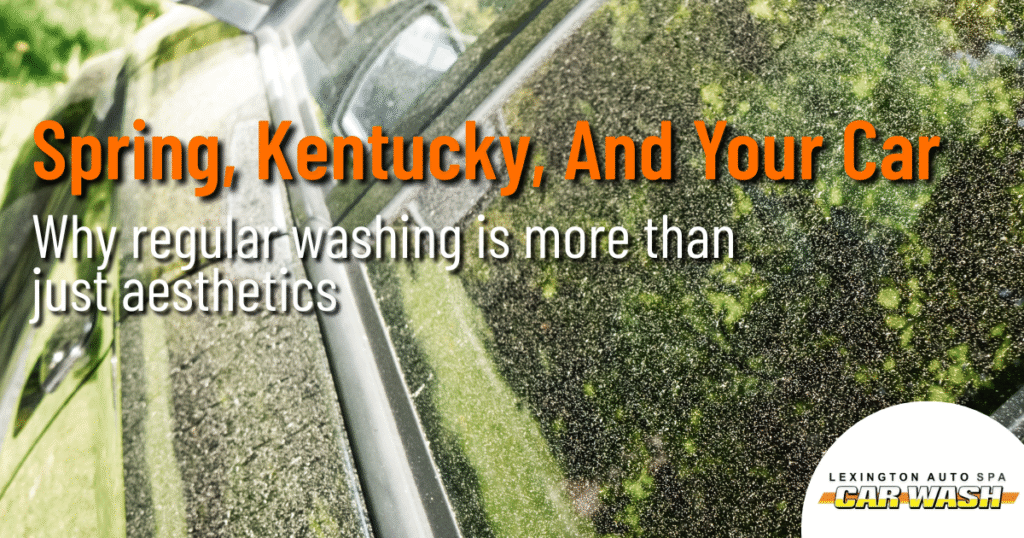
Here’s what’s actually happening to your paint from March through June, and why a regular wash is the smartest maintenance move you can make.
If you’ve ever walked out to your car on an April morning and found it coated in a layer of fine yellow dust, you already understand what Kentucky spring does to a vehicle. Pollen is the obvious culprit, but it’s only one part of a much bigger picture.
From the moment winter breaks, your car is dealing with a lineup of contaminants that don’t just make it look dirty. They actively work against your paint, your clear coat, and in some cases your vehicle’s mechanical components. The good news is that regular washing addresses all of it. The bad news is that a lot of drivers don’t realize the damage is happening until it’s already done.
Understanding what’s actually on your car, and what it’s doing while it sits there, makes the case for consistent washing a lot more compelling.
Five Contaminants Kentucky Drivers Deal With Every Spring
1. Pollen
Kentucky’s pollen season gets underway in late February and hits its peak through March and April. Oak, maple, ash, elm, birch, cedar, and poplar are among the tree species releasing pollen across the region during this window, and the Lexington area gets a heavy dose of all of them.
Pollen looks harmless enough, but under a microscope it tells a different story. The outer surface of a pollen grain is covered in tiny spines, which is what allows it to attach to plant life as part of the reproductive process. Those same spines are what make pollen grip onto your vehicle’s surfaces so stubbornly.
The more serious issue is what happens when pollen gets wet. Once moisture breaks the outer shell, the grain releases acidic compounds that begin to work their way into your clear coat. On a warm, humid Kentucky spring day, that process can start quickly. Pollen that sits through rain cycles and dries repeatedly gets more aggressive over time. Eventually, it can cause etching, staining, and clear coat damage that washing alone cannot fix.
Washing regularly during peak pollen weeks is the most straightforward way to stay ahead of it.
Allowing pollen to build up increases the chance of etching and stains, particularly when it gets wet. Aim to wash your car every few days, or weekly at minimum."
BLISS Car Wash, seasonal paint protection research
2. Leftover Road Salt
Winter road treatment in Kentucky means heavy salt application, and a lot of that salt doesn’t disappear when the snow does. It settles into wheel wells, along the undercarriage, around brake components, and in the crevices of the vehicle’s underside where it quietly continues to do damage well into spring.
The chemistry is straightforward: salt accelerates corrosion. Kentucky Farm Bureau notes that road salt can eat through paint and trigger rust that eventually compromises structural components, with brake lines and fuel lines among the most vulnerable areas. The EPA has put the annual nationwide cost of road salt damage to vehicles, roads, and infrastructure at approximately $5 billion.
A thorough spring wash should always include an undercarriage rinse. That’s where the salt accumulates, and it’s the part of the car most drivers never think about until something breaks.
3. Tree Sap
Spring growth means sap, and if you park anywhere near trees, some of that sap will find its way onto your vehicle. Fresh sap is sticky and difficult to remove cleanly. As it dries and hardens in warmer temperatures, it bonds more aggressively to whatever surface it lands on.
The practical problem with sap is that it needs to come off before it sets. Once it hardens, removal without the right products risks scratching the paint underneath. Getting to it early, at the carwash before it has a chance to cure, is a much easier solution than trying to deal with it later.
4. Spring Rain
Rain might seem like a natural cleaning agent for your vehicle, but it actually adds to the contamination problem rather than solving it. Rainwater picks up pollutants and particulates as it falls through the atmosphere, and when it dries on your vehicle’s surface it leaves those materials behind as deposits.
There’s also a secondary effect worth knowing about: rain reactivates contaminants that are already on your car. Pollen, sap residue, and salt that have started to dry out get chemically active again when wet, which accelerates the damage they can do to your finish. A wash after a significant spring rain is genuinely worthwhile, even if the car looked clean before the storm.
5. Bugs and Bird Droppings
Spring travel in Kentucky comes with bugs on the front end of your vehicle, and bird activity picks up as well. Both are acidic and both can cause paint damage faster than most people expect.
Bug splatter begins breaking down the clear coat almost immediately in warmer weather. Bird droppings contain uric acid, which can etch into paint within a matter of hours under the right conditions. Neither should be left to sit.
This Is a Maintenance Issue, Not Just a Cosmetic One
Your car’s paint and clear coat do more than make the vehicle look good. They protect the metal underneath from moisture, oxidation, and the kind of long-term corrosion that becomes a mechanical problem rather than just a cosmetic one.
Once the clear coat is compromised, the underlying paint is exposed. Once paint is compromised, bare metal is exposed. In Kentucky’s climate, bare metal and moisture is a combination that leads to rust. Rust weakens structural components, accelerates wear on suspension and brake systems, and tends to spread if it isn’t addressed.
Beyond the structural argument, paint condition has a direct effect on resale value. Vehicles with clean, well-maintained paint and protected undercarriages hold their value better over time. Skipping regular washes isn’t just a cosmetic shortcut. It’s a financial one too.
What to Look for in a Spring Car Wash
Not every wash handles spring contaminants equally well. A few things worth paying attention to when choosing where to take your car during this season:
Undercarriage treatment matters most coming out of winter. Look for wash options that include dedicated undercarriage pressure rinsing. That’s where road salt accumulates, and a surface wash won’t reach it.
Pre-treatment and hand prep before the tunnel makes a real difference for spring contaminants. Pollen, sap, and bug splatter benefit from some dwell time with the right chemistry before the main wash cycle. That extra step is what separates a thorough clean from a rinse.
Protective sealants, including graphene and ceramic options, provide a layer of defense between your paint and whatever the season throws at it. Regular application keeps the protection effective. A single treatment after a deep spring clean is a good starting point, but the more consistently it’s refreshed, the better it performs.
Lexington Auto Spa is Ready for Spring
Lexington Auto Spa has been doing it right since 2005. Full-service washes, express options, and premium packages for every schedule and budget, with hands-on attention to every vehicle, every time.
If you want a thorough spring clean to reset after winter, or you’re looking to get into a regular wash routine that protects your vehicle through the season, we’re here for it.
Spring is short. The damage pollen, salt, and sap can do isn’t.
Family-owned. Lexington proud. Where dirt stops and shine begins.
Ready to Protect Your Vehicle This Spring?
Lexington Auto Spa has been doing it right since 2005 — full-service, express, and premium shine packages for every schedule and every budget. Family-owned. Lexington proud. Where dirt stops and shine begins.
- Lexingtonautospa.com
- 1124 Winchester Road, Lexington, KY 40505
- 859-254-9663
Sources:
• Kentucky Farm Bureau Insurance — How to Protect Your Car from Salt Damage. kyfb.com/insurance/lifes-blueprints/how-to-protect-your-car-from-salt-damage
• BLISS Car Wash — Can Pollen Damage Car Paint? Seasonal Threats to Your Vehicle’s Finish (2025). blisscarwash.com/can-pollen-damage-car-paint-seasonal-threats-to-your-vehicles-finish
• XPEL — Top 5 Springtime Pollutants That Can Damage Your Car’s Paint (2023). xpel.com/blog/top-5-springtime-pollutants-watch-out-that-can-damage-your-cars-paint
• Wyndly — When Is Kentucky Allergy Season? Start, Peak, and End. wyndly.com/blogs/allergy-season/kentucky
• Family Allergy & Asthma — Pollen Throughout the Year (Kentucky pollen stations). familyallergy.com/general/pollen-throughout-the-year
• Avalon King — Why Is Pollen So Sticky on Car Paint? (2020). avalonking.com/blogs/car-detailing/why-is-pollen-so-sticky-on-car-paint
• Rainstorm Car Wash — From Road Salt to Dust: Seasonal Changes That Impact Your Car’s Exterior (2025). rainstormcarwash.com/from-road-salt-to-dust-seasonal-changes-that-impact-your-cars-exterior
• EPA (via Kentucky Farm Bureau) — Annual cost of road salt damage: ~$5 billion nationally